HKUST Research Team Led by Prof. Yajing SHEN Develops Embodied Robotic Arm “EmArm” with Human-Like Touch Sensing
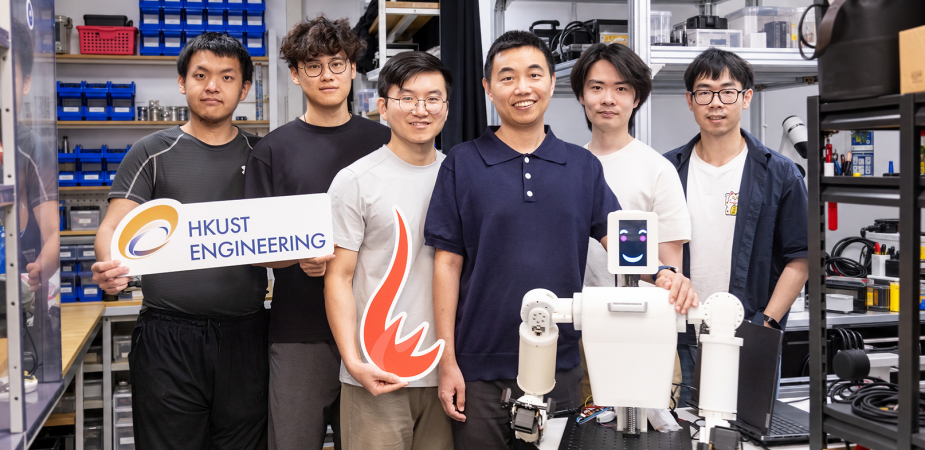
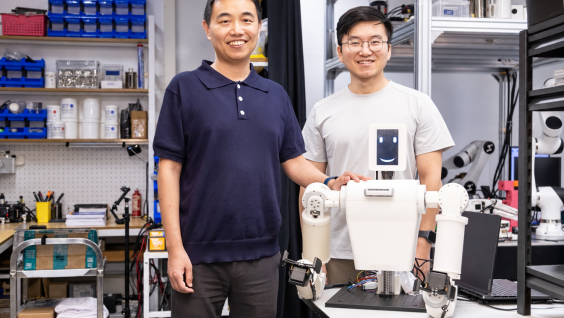
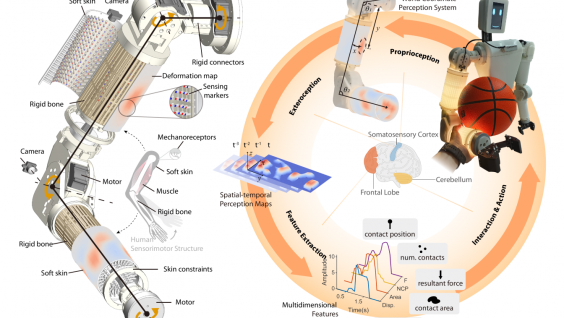
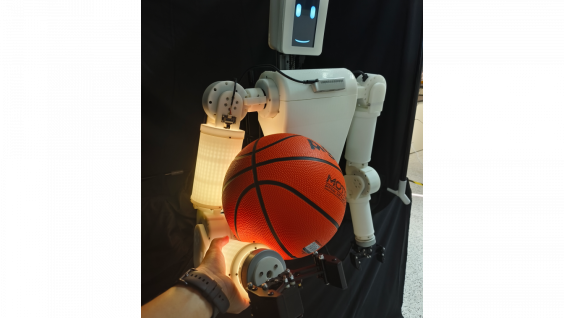
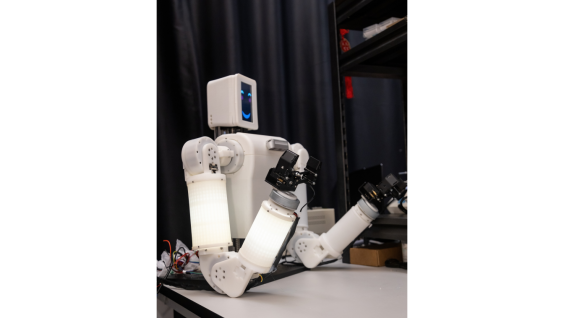
A research team led by Prof. Yajing SHEN at the Mevita Robotics Lab, has developed EmArm, an Embodied Sensorimotor Robotic Arm with human-like whole-arm tactile sensing and adaptive manipulation. By embedding a soft optical tactile skin into the robotic skeleton and integrating it with a real-time perception-action algorithm, EmArm can sense contact across its upper and lower arms, recognize different touch interactions, respond with emotional expressions, and avoid obstacles through tactile feedback.
Tactile sensing reaches 97.9% fidelity while preserving high-precision actuation
The arm’s soft tactile skin covers more than 71,000 square millimetres and achieves a sensing fidelity of up to 97.9%, while preserving high-precision, high-load robotic operation. Its perception-action loop combines joint-position data with tactile information, enabling the robot to interpret contact and adjust its movements in real time. EmArm can recognize five touch behaviours—stroking, pinching, poking, tickling, and hitting—with up to 99.8% accuracy, stabilize an off-centre object, and autonomously stop and replan its path when encountering an obstacle that cannot be seen.
The study, with Dr. Yifeng TANG as first author and Prof. SHEN as corresponding author, was published in Nature Sensors under the title “Embodied sensorimotor integration for whole-arm tactile sensing and adaptive robotic manipulation” Prof. SHEN’s team believes EmArm marks a shift from externally attached sensing toward intrinsic robotic intelligence, and could support safer, more adaptive humanoid robots in home services, industry, and medical assistance.
Related link: