Prof. YANG Yansong leads development of ultra-robust acoustic chips for 6G and satellite use
Researchers at HKUST have developed a new chip architecture, “Layered Acoustic Wave” (LAW), that allows miniature acoustic devices to handle over 12 times higher power while running cooler and more stably. The design cuts temperature rise by 70% and achieves a record power density of 36.4 W/mm², overcoming long-standing limits that confined such chips to low-power applications.
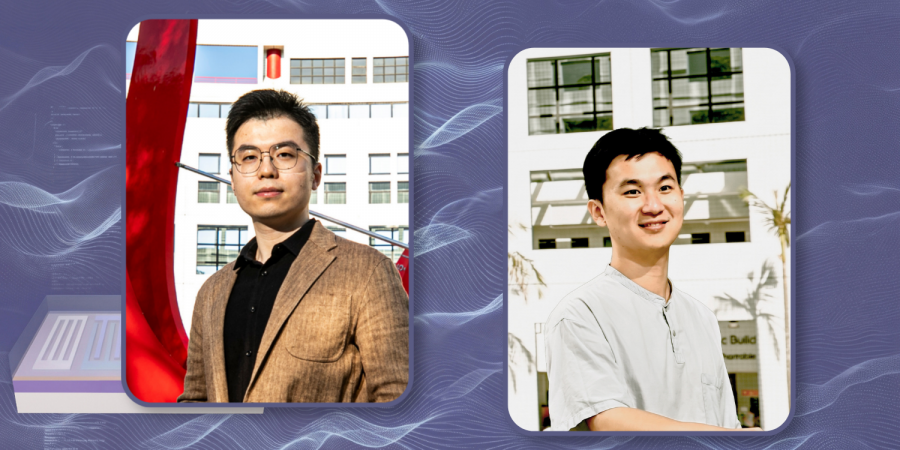
Led by Prof. YANG Yansong, with his PhD student QIAN Fangsheng as the first author, the team reengineered the device’s top surface—previously thought to require exposure to air—by adding layered materials that improve heat dissipation, reduce mechanical stress, and stabilize performance. Tests confirmed significantly higher durability and no major failure issues seen in conventional designs.
Published in Nature Communications, titled “Suppressing acoustomigration and temperature rise for high-power robust acoustics”, the breakthrough overcomes long-standing limits of acoustic chips and opens up applications in direct-to-cell satellite communication, 6G networks, and advanced wireless and energy systems.
Related link: